

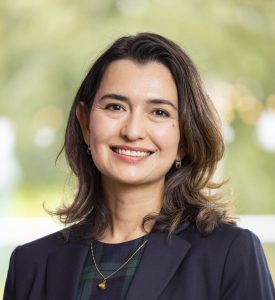
Burçin Temel McKenna (Ramboll)
Burçin Temel McKenna is the Global Head of Carbon Capture Competency Center at Ramboll. She has 20 years of industrial experience with her past leadership roles in sectors such as chemicals, mining and cement from Topsoe and FLSmidth where these sectors are characterized as hard-to-abate and in need of carbon capture. At Ramboll, she is responsible for commercial and technical leadership and management of the Competence Center. Center’s business offerings are as due diligence, concept, feasibility, Pre-FEED, FEED, and Owners Engineer studies of the CCUS value chain as well as EPCM and system integration projects. Burcin holds executive MBA from Copenhagen Business School and a PhD from UC Santa Barbara followed by a post-doc at Berkeley. She also serves as a board member at EIT Raw Materials where she is involved in EU-level transaction evaluation and public-private partnership structures in the sustainable mining space.
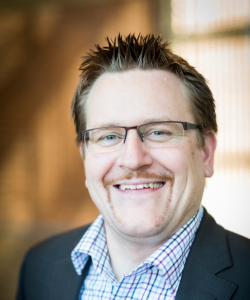
Christian Breyer (LUT University)
Christian Breyer is Professor for Solar Economy at LUT University, Finland. His major expertise is the integrated research of technological and economic characteristics of renewable energy systems specialising in energy system modeling for 100% renewable energy, on a local but also global scale. Publications cover integrated sector analyses with power, heat, transport, desalination, industry, and negative CO2 emissions. The Power-to-X Economy comprises most of his research and 1.0⁰C pathways are increasingly investigated in addition to the 1.5⁰C standard.
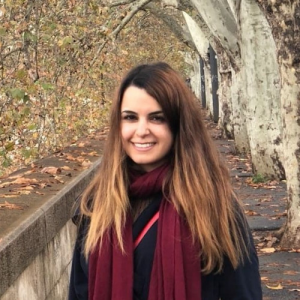
Jasmin Sharzad (Danish Ministry of Climate, Energy and Utilities)
Jasmin Sharzad is Deputy Head of Division at the research and subsurface section within the Danish Ministry of Climate, Energy and Utilities. Her section is in charge of the Danish CCS regulation, supporting political decisions and creating the framework for the Danish CCS subsidy schemes. She holds a MSc in international business and politics.
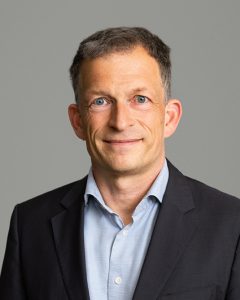
Thomas Ollendorff (CarbonCuts)
Thomas is Head of Commercial and Finance and is part of the management team. Thomas is an experienced leader with a long career in the Danish energy industry. For many years, he has been involved in the development of the Nordic natural gas market and has led complex commercial negotiations as well as a number of M&A processes. In addition, Thomas has worked on the development of the biogas market in Denmark as well as the early establishment of hydrogen production in the Nordics. Thomas has a master’s degree in economics from the University of Copenhagen.
Lasse Læbo Mathiesen (CSEI, CBS)
Lasse is a postdoc at CSEI and KU's Department of Geosciences and Natural Resource Managemen working on social topics in infrastructure. His focus is primarily on the use of environmental economics tools to understand acceptance and trust in infrastructure development. As part of the project on public acceptance of carbon capture utilisation and storage (PaoCCUS) funded by INNO-CCUS he has worked on understanding both local and national acceptance of CCS and how information can “help” shape public opinion.
Cathrine Ringstad (Bellona)
Cathrine Ringstad is Senior advisor CCS at the Bellona Foundation. She holds a master’s degree in physics and a PhD in rock mechanics from the Norwegian University of Science and Technology (NTNU). Cathrine has extensive research and industry experience within geophysics and rock mechanics, and long proven skills in management and dissemination of multidisciplinary projects. She has been involved in CCS activities for ten years with focus on CO2 storage and the CCS value chain. At Bellona, Cathrine is working with CCS legislation and policy frameworks in Norway and the EU. This includes standardisation where she is the convenor for TC 474/WG4 on geological storage for the European standardisation body CEN.
Mikkel Hansen (decarbonICE)
Mikkel Navarro Hansen is COO and Co-founder of DecarbonICE, where he leads the development of innovative CO₂ transport solutions that enable scalable carbon capture and storage. With more than 30 years of experience spanning maritime operations, shipping, logistics, innovation and executive leadership, Mikkel combines practical industry expertise with strategic business development. Prior to founding DecarbonICE, he served as CEO of Maritime & Logistics Innovation Denmark (MDC), held senior leadership roles within the Maersk Group and Nordic Tankers, and was Head of Marine HR at Ultranav. Mikkel is a Master Mariner from SIMAC and holds an MBA in Shipping and Logistics from Copenhagen Business School.
Francesca Di Bartolomeo (SINTEF Industry)
Francesca Di Bartolomeo is a Senior Research Scientist at SINTEF Industry, specialising in industrial biotechnology, fermentation, microbial cell biology and circular bio-based processes. She holds a PhD in yeast cell biology from TU Graz (Austria) and completed postdoctoral research in systems and synthetic biology at Chalmers University (Sweden). Since 2019, she has coordinated, managed or contributed to leadership roles in more than 20 EU and national R&D projects, building a portfolio of approximately 190 million NOK. Her work focuses on CO2 utilisation, sustainable food and feed, microbial protein and lipid production, bio-based materials and circular bioeconomy solutions. She has authored over 20 peer-reviewed publications and contributes actively to scientific dissemination, industry collaboration and project development. She has also held research-management responsibilities at SINTEF, leading multidisciplinary teams and supporting collaboration across research organisations, universities, SMEs and large industrial partners.
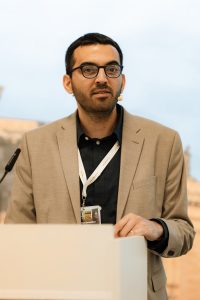
Matteo Vitale (European Energy)
With more than a decade of experience in renewable energy, modelling and project development, Matteo Vitale works at the intersection of engineering, economics and finance. His focus is on developing Power-to-X projects and turning complex technical and commercial challenges into scalable solutions for the energy transition.